
Idle Cat Gunner: Shooter RPG
NEPTUNE(TREEPLLA)Casual
4.4934.00 Reviews
- Version
- 1.1.69
- Installs
- 1.00M
- Age Rating
- Everyone
Screenshots
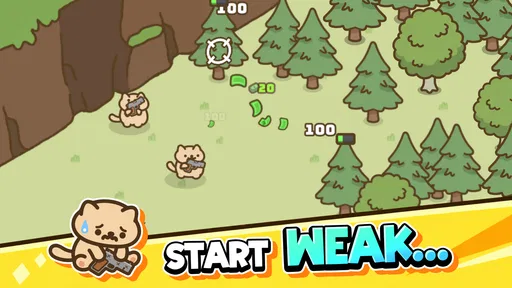
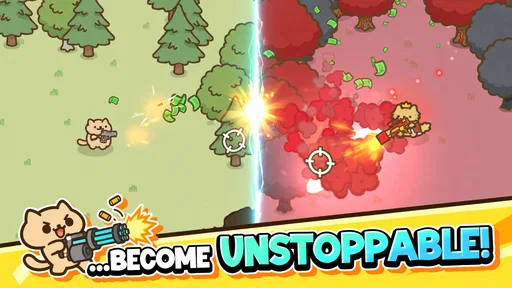
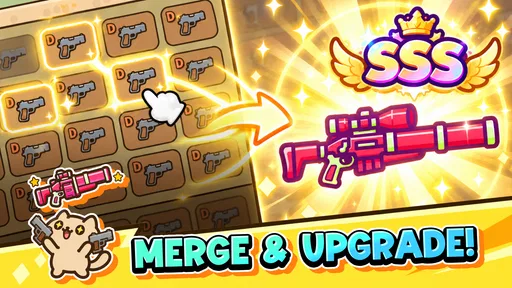
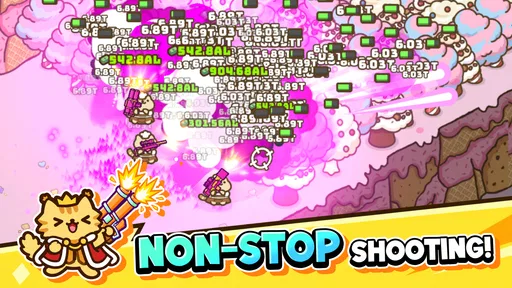
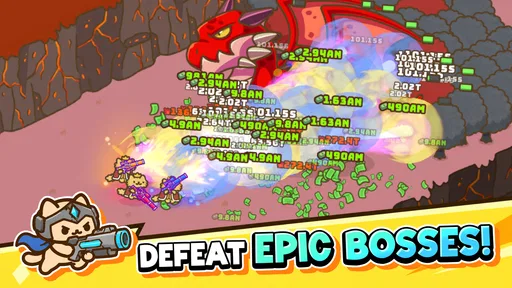
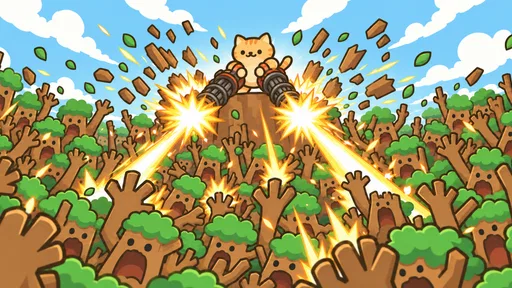

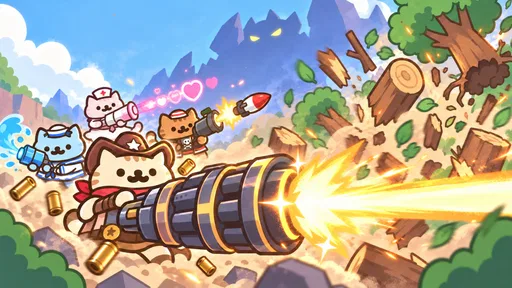
Our Review of Idle Cat Gunner: Shooter RPG
 Analysis by Appyee
I went into Idle Cat Gunner: Shooter RPG expecting a light idle game with a funny theme, and that is exactly where its appeal begins: the contrast between tiny cats and serious-looking weapons. It is a casual role-playing shooter built around short check-ins rather than long, demanding sessions. The cats keep the mood playful, while the shooting and upgrading give each visit a clear purpose.
The basic question is simple: can I make my little squad stronger, collect the next reward, and leave with a good reason to return? In my experience, the game works best when I treat it as a compact routine instead of a full-time action game. I open it, deal with whatever progress has accumulated, improve the team, push forward, and close it again. That rhythm is easy to understand, but the details of how I spend resources determine whether the loop feels satisfying or merely repetitive.
How the cat-shooter loop feels in practice
I focus here on the practical feel of guiding the cat squad through an idle shooter RPG, especially how a brief visit can still give me a clear decision to make. I also consider where that low-pressure rhythm suits a daily routine—and where someone seeking constant hands-on action may want a different kind of game.
The first action is easy to understand
The first few moments communicate the game’s identity quickly. I am not asked to master complicated controls before seeing progress. The central attraction is a squad of armed cats moving through a shooter RPG structure, with the idle element doing much of the waiting for me. That makes the opening feel approachable, especially if I want something I can inspect during a spare minute.
What I like about this design is that the first action is usually meaningful even when it is small. I can check the current battle, collect what has been earned, and look for a sensible upgrade rather than wandering through a large map or learning a long chain of systems. The game’s category matters here: as a casual title, it is more concerned with a friendly repeatable routine than with demanding reflex tests.
The action still has enough visual personality to avoid feeling like a spreadsheet. The cat soldiers give the battles a deliberately silly tone, and the gunner theme makes the combat feedback more obvious than it would be in a purely decorative idle game. I can see that the team is doing something, understand that enemies are being cleared, and connect that activity to the next improvement.
That accessibility also creates the first limitation. Players looking for a deep, hands-on shooter may find that the idle structure softens the action too much. I do not get the same sense of direct control that I would expect from an arcade shooter, nor the careful positioning of a tactical RPG. The game is better suited to people who enjoy managing momentum than to people who want every victory to depend on their own aim.
The feedback rhythm keeps short visits moving
The most important part of the experience is the feedback rhythm: action leads to visible progress, progress produces a reward, and the reward suggests the next action. When that chain is working, even a brief visit feels complete. I can open the game while waiting for a kettle to boil, handle the available tasks, make one useful improvement, and leave without feeling that I abandoned a long mission halfway through.
This is where the shooter presentation helps. Damage, defeated enemies, and advancing stages give the idle numbers a sense of movement. I am not only watching a resource counter rise; I am watching a cat army turn that growth into combat progress. The presentation does not transform the game into a manual action title, but it gives the waiting period a more entertaining frame.
I also appreciate that the loop naturally divides into small decisions. A reward arrives, I decide whether it is better spent on immediate strength or saved for a larger improvement, and then I test the result by pushing the team onward. That is more engaging than collecting everything automatically and having no meaningful choice afterward. The most satisfying moments come when a modest upgrade changes a stalled run into a clean advance.
There is a practical tip hidden in that rhythm: I try not to spend every resource the instant I receive it. Saving briefly gives me a clearer view of what is blocking progress. If the team is failing because damage is too low, an offensive improvement makes sense; if the problem is surviving long enough, a defensive choice may offer more value. Idle games can encourage careless tapping, but this one is more enjoyable when I pause long enough to identify the actual bottleneck.
The rhythm is less effective for players who need constant novelty. Once the surprise of the cats and weapons settles, the pleasure depends on seeing incremental gains. Some sessions feel rewarding because a new threshold is reached; others are mainly maintenance. That is normal for the format, but it means the game should be judged as a check-in experience rather than a replacement for a longer console-style campaign.
Rewards are useful when they change the next decision
Rewards are the reason the first action matters. In a good idle loop, collecting something does not end the session; it opens a decision. Here, the reward feels most valuable when it lets me strengthen the army, recover from a difficult stretch, or move the current run forward. The cats are not just a visual theme then. Their progress gives the reward a clear emotional destination.
I find the reward cycle easiest to enjoy when I set a small goal before spending anything. Instead of upgrading randomly, I ask whether I am trying to clear a particular obstacle, improve the team’s general pace, or prepare for the next return. This simple habit prevents the game from becoming a sequence of automatic claims. It also makes the improvement easier to notice because I know what result I am looking for.
The free entry point is important. The game costs nothing to start, so I can test the loop without committing money first. It includes optional in-app purchases ranging from $0.99 to $49.99 per item, which means the spending range is wide enough to deserve attention. My advice is to play long enough to understand the ordinary reward rhythm before considering any purchase. If the basic loop already feels too repetitive, buying progress will not fix that underlying issue.
For me, the best use case is a player who enjoys gradual collection and light optimization. I can make progress in short bursts, return later, and still feel that the squad is moving toward something. The game is less convincing for someone who wants every reward to unlock a dramatic new mechanic. Its satisfaction comes from accumulation and improved efficiency, not from constant reinvention.
Another useful approach is to treat rewards as pacing tools. When I receive enough progress to push ahead, I do not always continue until the team reaches another wall. Sometimes stopping after a successful advance makes the next visit feel better because there is a clear unfinished target. This is especially helpful with idle games: ending on a small victory creates a reason to reopen the app without turning the game into an obligation.
The reset is what makes another session worthwhile
The reset in this kind of game is not necessarily a dramatic restart. It is the moment when I leave the current state, let time pass, and return to see what the army has achieved. That return is the real test of the idle design. If the game gives me nothing interesting to do after waiting, the loop becomes a notification check. If it presents a new choice, the waiting period feels like part of the strategy.
In everyday use, I might open it before work, collect what is ready, make one upgrade, and close it. Later, during a commute or a quiet break, I return with a little more progress available. I do not need to remember a complicated chain of actions, which is a genuine strength for a casual mobile game. The app fits around my day instead of demanding that I rearrange my day around it.
That convenience has a trade-off. The more the game relies on returning after time has passed, the less exciting it is during a single uninterrupted sitting. I can play actively for a while, but the design’s strongest reason to stop is also its strongest reason to return: progress continues as a background rhythm rather than as a constant stream of manual challenges. Players who dislike waiting may prefer a conventional action game where every minute produces direct input and immediate consequences.
I also think the reset works better when I leave with a plan. Before closing, I identify the next upgrade or stage I want to reach. That turns the next opening into a continuation rather than a vague check for free items. It is a small workflow, but it improves the feeling of purpose: collect, inspect, choose, push, stop, and return.
The game’s age rating of Everyone makes its cute presentation easy to recommend for a broad audience, at least in terms of tone. Still, the presence of weapon-themed combat means parents may want to decide whether that cartoon treatment suits their household. The style is playful rather than grim, and the cats are clearly the main source of charm, but the gunner identity remains central to the game’s presentation.
Where the progression feels strong and where it slows down
Progression feels strongest when I can connect a specific improvement to a visible change in performance. A stronger squad should not feel like an abstract number; it should help me clear a stage that previously resisted my cats. That relationship between upgrade and outcome is what gives the idle structure a sense of agency. I may not control every shot, but I still influence how efficiently the army handles the next challenge.
The weaker side is the possibility of routine. Once I understand the collection-and-upgrade pattern, the novelty comes mainly from the next obstacle and the next improvement. That can be enough for a relaxed player, but it may not satisfy someone who wants elaborate character builds or highly varied combat encounters. I would not choose this as my main RPG if I wanted deep party composition, careful storytelling, or a large amount of manual combat.
There is also a temptation to judge progress only by how fast the numbers rise. I get better results when I judge it by friction: how long the team remains effective, whether a stage wall disappears, and whether my next visit has a clear purpose. That perspective prevents me from chasing every available upgrade and helps me notice which choices actually improve the experience.
The current version is 1.1.56, and the game supports devices running Android 8.1 or later. Those details matter if I am installing it on an older phone. On a compatible device, the low-pressure structure is a good match for casual play, but I would still keep expectations realistic: compatibility makes the game accessible, not automatically deep or endlessly varied.
Who should try it, and who should skip it
I would recommend it to someone who likes idle progression, cheerful character designs, and the feeling of building a small force over repeated visits. It is particularly suitable for players who want a game that can be checked in short sessions without losing its central thread. The cat-and-gun combination gives the routine more personality than a plain resource manager, while the RPG framing provides a reason to care about strengthening the squad.
I would be more cautious recommending it to a player who wants precise controls, intense competition, or a story-led adventure. The game’s core pleasure is not mastering difficult aiming. It is watching the army improve, choosing when to invest, and returning after a pause to see what changed. If that sounds passive rather than relaxing, a fully manual shooter or a deeper strategy RPG would likely be a better fit.
The audience response is encouraging without being a guarantee: the game holds a 4.5 average from around 19 thousand ratings, with over 500 thousand installs. I read that as evidence that the central idea connects with many players, not as proof that every player will enjoy the pacing. Idle games are unusually personal; one person’s satisfying background progress is another person’s lack of control.
Developer NEPTUNE(TREEPLLA) has chosen a very clear identity here. The title does not hide what it is trying to deliver: a casual cat-centered shooter RPG with an idle foundation. That clarity helps me decide quickly whether it belongs on my phone. I do not have to expect a serious military game or a traditional role-playing epic and then feel disappointed when the design remains light.
My verdict on the complete loop
After looking at the full cycle, I think the game succeeds because each stage leads naturally to the next. The first action is approachable, the combat feedback gives waiting some energy, rewards create small upgrade decisions, and the reset supplies a reason to return. The loop is not revolutionary, but it is coherent. The cats provide charm, the gunner theme provides motion, and the idle structure keeps the commitment manageable.
My main advice is to play it in deliberate visits rather than trying to force a long marathon. Collect what is ready, identify the current obstacle, make the upgrade that addresses it, push forward until the next sensible stopping point, and leave with a target for the next session. That approach makes the reward-reset relationship much clearer and reduces the feeling of tapping through menus without a plan.
It is also worth keeping the purchase option in perspective. The game is free to begin, while optional items cost between $0.99 and $49.99 each. I would only consider spending if I already enjoyed the ordinary loop and understood what kind of convenience I was buying. The strongest reason to keep playing should come from the squad’s progress, not from feeling pressured to remove every delay.
Overall, this is a friendly casual game for people who want a tiny armed cat army to manage between other parts of the day. It does not replace a hands-on shooter, and it will not satisfy everyone looking for a complex RPG. But when I want a low-pressure routine with clear feedback, small strategic choices, and a satisfying excuse to check back later, Idle Cat Gunner: Shooter RPG makes a convincing case for keeping one more session in reserve.
Privacy and Permissions
See what permissions an app requests and how it handles your data.
- Wi-Fi connection information
- view Wi-Fi connections
- Other
- view network connections, full network access, control vibration, prevent device from sleeping, Google Play license check
Verdict
Strengths of Idle Cat Gunner: Shooter RPG
- Simple idle progression lets your cats earn rewards while you are away.
- Cute cat-themed art gives the shooter RPG a lighthearted visual style.
- Hero and weapon upgrades provide clear short-term progression goals.
- Automatic combat makes it easy to play with minimal controls.
- Multiple cats and equipment options add variety to team building.
Limitations of Idle Cat Gunner: Shooter RPG
- Progress can slow noticeably when upgrade costs begin to rise.
- Offline rewards may feel limited compared with actively playing.
- Combat can become repetitive because much of it is automated.
- Random equipment drops may make building a strong team unpredictable.
- Frequent upgrade decisions and reward screens can feel overwhelming.
Other Releases by NEPTUNE(TREEPLLA)
View All
Gear Truck!
Strategy4.4
Similar Picks in This Category
View All
My Talking Angela
Outfit7 Limited4.2

My Talking Tom
Outfit7 Limited4.3

Pou
Zakeh4.2

My Talking Tom 2: Pet Game
Outfit7 Limited4.3

Candy Crush Saga
King4.6

Bridge Race
Supersonic Studios LTD4.1
Frequently Asked Questions
What is Idle Cat Gunner: Shooter RPG?
Idle Cat Gunner: Shooter RPG is a casual idle shooter and role-playing game in which you build a team of armed cats to fight waves of enemies. You can upgrade heroes, weapons, skills, and equipment while progressing through missions. Because battles continue with automated actions, the game is designed for players who enjoy gradual progress without constant manual control.
Does Idle Cat Gunner: Shooter RPG require an internet connection?
The game may allow some basic gameplay features to work offline, particularly idle rewards or previously unlocked content, but an internet connection is generally recommended. Online access can be necessary for advertisements, cloud synchronization, events, updates, purchases, and reward claims. Offline progress may also be limited, so players should not assume that every feature will function without a stable connection.
Is Idle Cat Gunner: Shooter RPG free to download and play?
Idle Cat Gunner: Shooter RPG is typically available as a free download, but it may include optional in-app purchases and advertising. You can usually progress without spending money by collecting rewards and upgrading your team over time, although purchases may speed up development or provide additional resources. Parents should review device payment settings before allowing children to play.
How does progression work in Idle Cat Gunner: Shooter RPG?
Progression is based on completing stages, defeating enemies, collecting resources, and improving your cat heroes. You can generally strengthen characters through levels, weapons, equipment, abilities, and team combinations. When you are stuck, returning to earlier content for additional rewards can help. The idle system also lets your squad continue earning certain resources while you are away from the game.
Is Idle Cat Gunner: Shooter RPG suitable for children?
The game uses a cartoon-style presentation and humorous cat characters, but it is still centered on shooting enemies and combat. Suitability depends on the child’s age and your family’s preferences regarding animated violence, advertisements, and in-app purchases. It is a good idea to check the official age rating in your region, disable unauthorized purchases, and review any online or promotional features before installation.
Play our best games!


